SharkBot is an Android banking trojan that targets credentials and access to crypto wallets. It’s capable of ATS (Automatic Transfer System) attacks, overlay attacks, keylogging, and SMS/MMS interception. The sample here was obfuscated with Allatori.
SHA256: 9701bef2231ecd20d52f8fd2defa4374bffc35a721e4be4519bda8f5f353e27a
Tools: dex2jar, CFR Decompiler, Java Deobfuscator, CyberChef, JoeSandbox, Visual Studio Code
Initial Triage
Detonated the sample in JoeSandbox first. The malware immediately drops itself to establish persistence:
/data/app/com.agoxgljzqbdi.gwuaspmli-8SXhUqtOS-AbO5jLsdYFlw==/base.apk
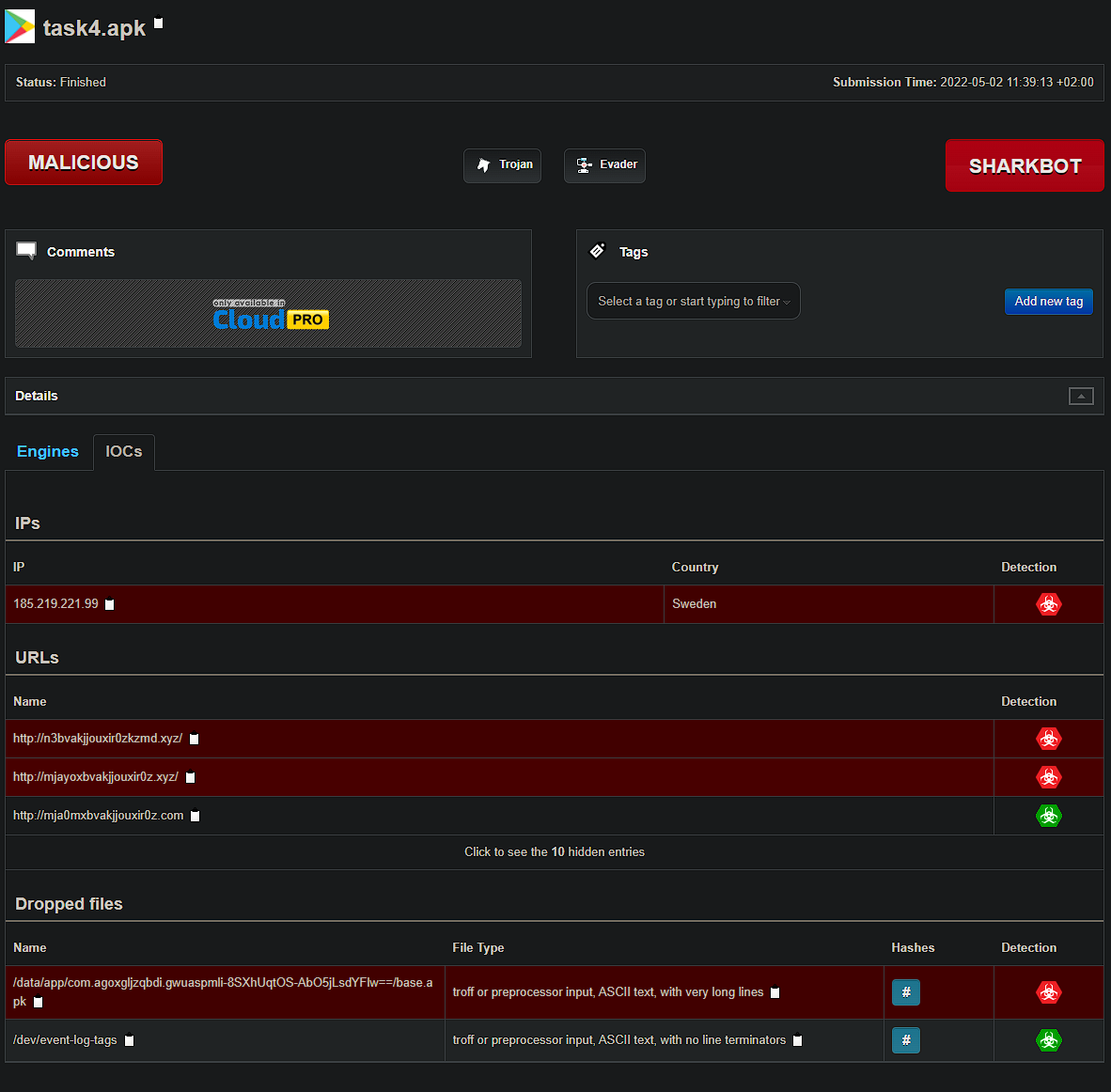
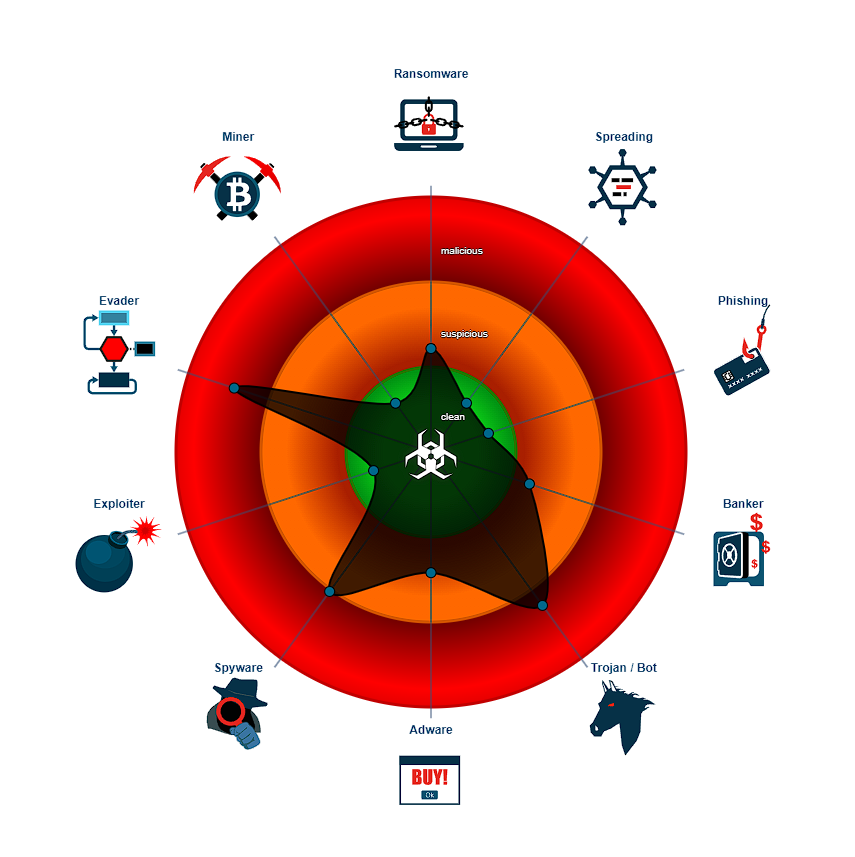
Sandbox classification confirms this is a trojan / spyware — not destructive, focused on monitoring and credential theft.
Network & URLs
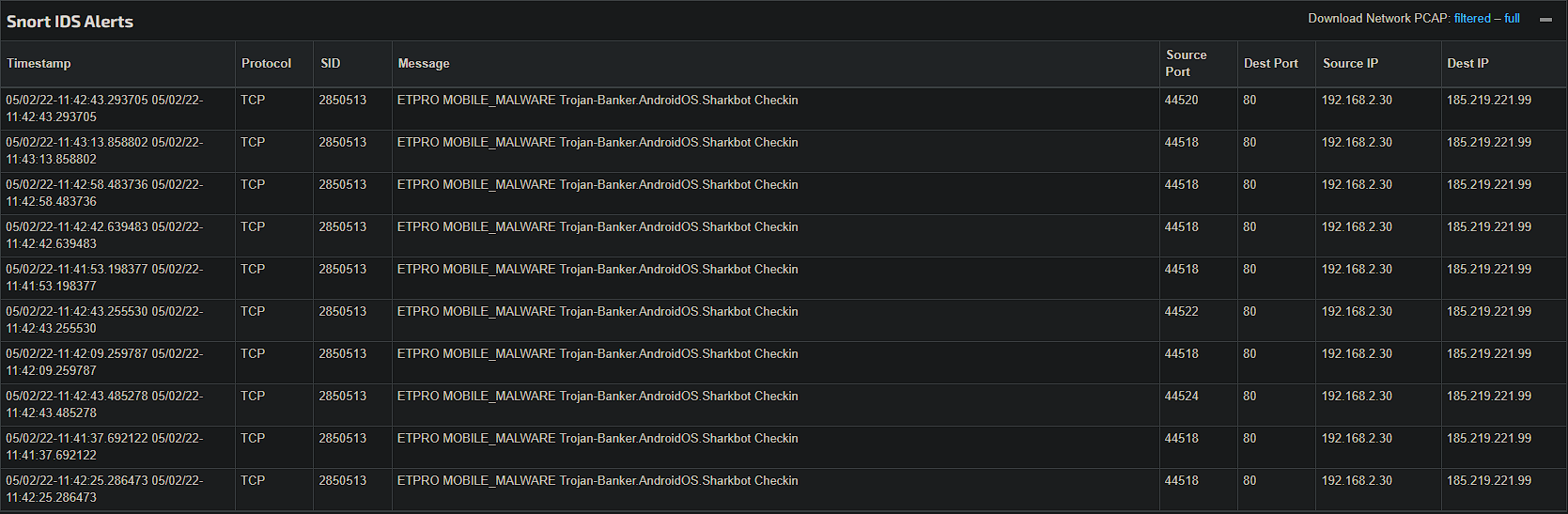
Network analysis from the sandbox IDS shows the malware repeatedly hammering the same IP — 185.219.221.99 is the C&C server.
Permissions & Receivers
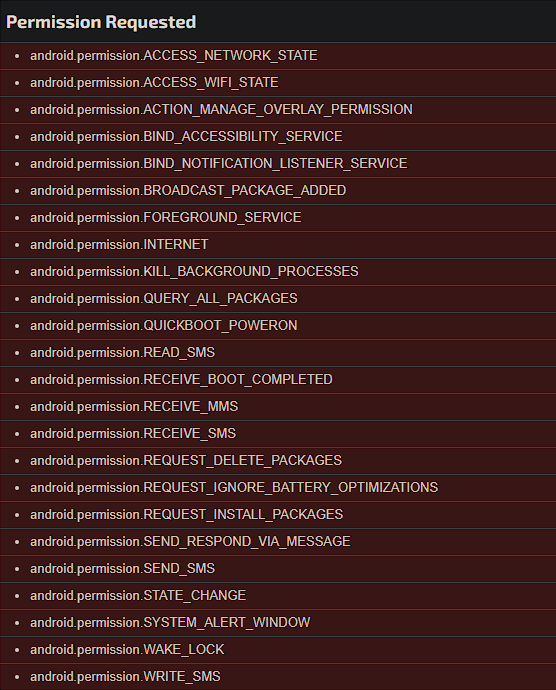
Permissions requested by the APK reveal capabilities before even looking at the code:
The registered receivers show how the malware survives reboots and intercepts messages:

bootReceiver— restarts the malware on boot and screen-on events (priority 99999)receiverMMS/receiverSMS— intercepts incoming SMS and MMS
APK Unpacking
Unpacked with dex2jar:
$ d2j-dex2jar task4.apk
dex2jar task4.apk -> ./task4-dex2jar.jar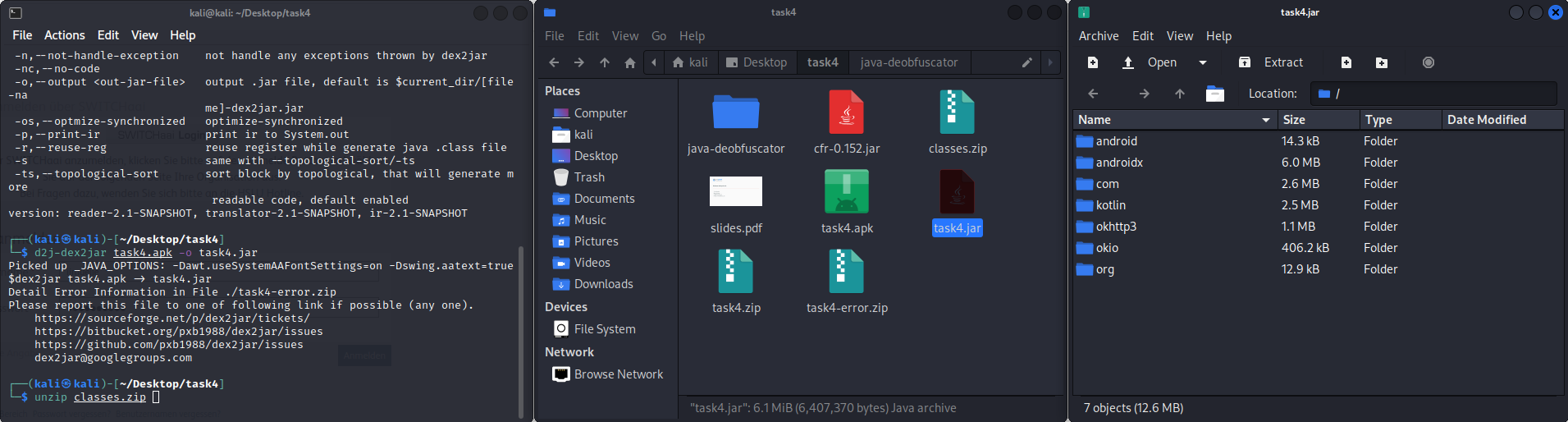
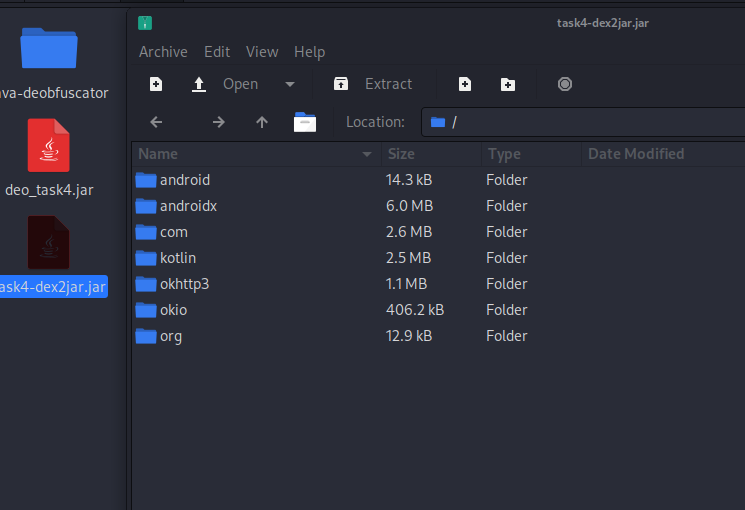
This produces a .jar with all the compiled Java classes. The jar structure contains standard Android libraries alongside the malware’s own com.agoxgljzqbdi.gwuaspmli package:
Deobfuscation
The Java Deobfuscator detect config:

Running detection identified Allatori string encryption:
$ java -jar deobfuscator.jar --config detect.yml
[main] RuleStringDecryptor: Allatori's string decryption is very simple,
       accepting an encrypted string and outputting a decrypted string
[main] Found possible string decryption class com/agoxgljzqbdi/gwuaspmli/x
[main] Recommend transformers:
[main]   com.javadeobfuscator.deobfuscator.transformers.allatori.StringEncryptionTransformer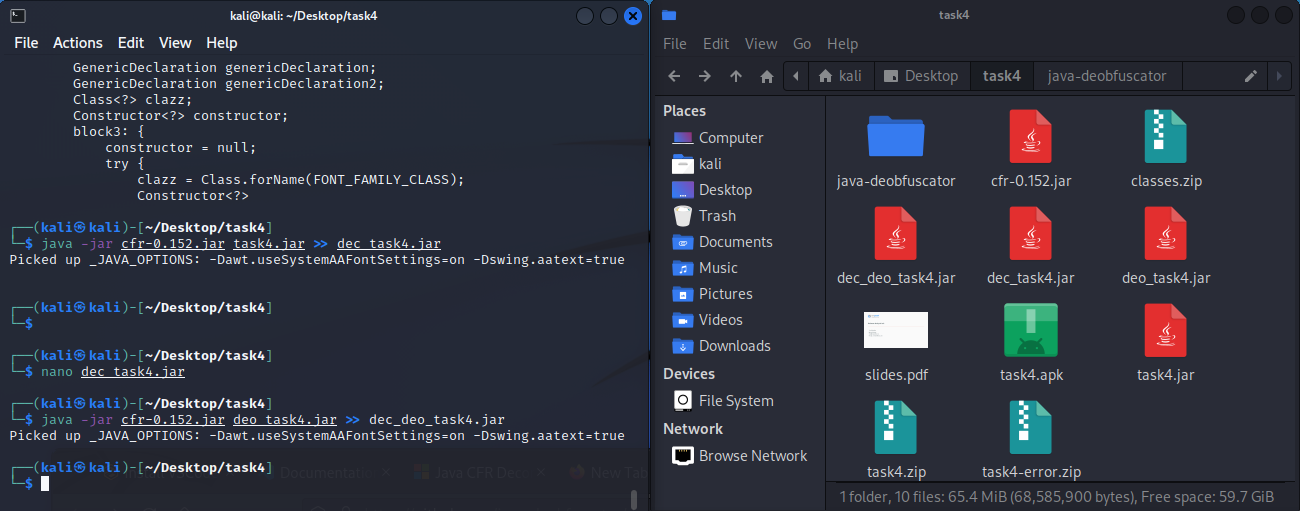
The transform config to apply the Allatori transformer:
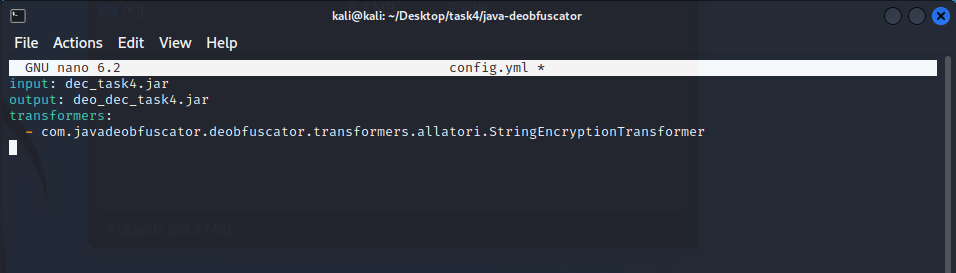
Running this produces interpretable Java. Some sections didn’t deobfuscate cleanly, but nothing critical was blocked.
Hardcoded RSA Public Key
Searching for RSA across the deobfuscated code:
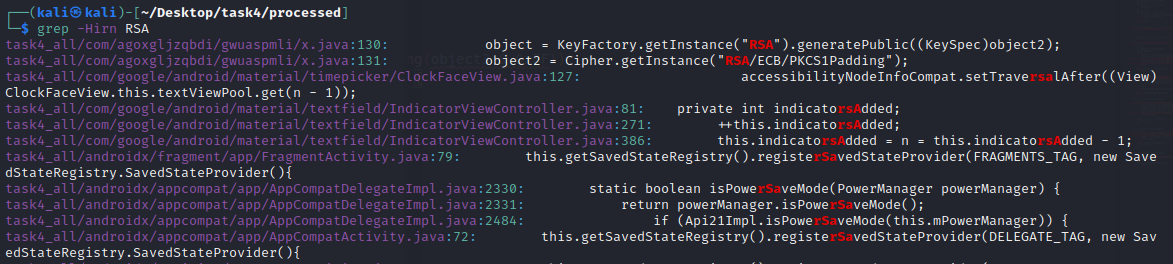
$ grep -Hirn RSA
x.java:130: object = KeyFactory.getInstance("RSA").generatePublic((KeySpec)object2);
x.java:131: object2 = Cipher.getInstance("RSA/ECB/PKCS1Padding");
x.java loads a hardcoded Base64 blob and uses it as an RSA public key to encrypt network traffic (via RC4 underneath). The key:
MIIBIjANBgkqhkiG9w0BAQEFAAOCAQ8AMIIBCgKCAQEA2R7nRj0JMouviqMisFYt
0F2QnScoofoR7svCcjrQcTUe7tKKweDnSetdz1A+PLNtk7wKJk+SE3tcVB7KQS/W
rdsEaE9CBVJ5YmDpqGaLK9qZhAprWuKdnFU8jZ8KjNh8fXyt8UlcO9ABgiGbuyuz
XgyQVbzFfOfEqccSNlIBY3s+LtKkwb2k5GI938X/4SCX3v0r2CKlVU5ZLYYuOUzD
LNl6KSToZIx5VSAB3VYp1xYurRLRPb2ncwmunb9sJUTnlwypmBCKcwTxhsFVAEvp
z75opuMgv8ba9Hs0Q21PChxu98jNPsgIwUn3xmsMUl0rNgBC3MaPs8nSgcT4oUXa
VwIDAQAB
The relevant code section from x.java:
public String L(String string2) {
    try {
        Object object = Base64.decode(
            "MIIBIjANBgkqhkiG9w0BAQEFAAOCAQ8AMIIBCgKCAQEA2R7nRj0JMouviqMisFYt..."
            .getBytes(StandardCharsets.UTF_8), 2);
        Object object2 = new X509EncodedKeySpec((byte[])object);
        object = KeyFactory.getInstance("RSA").generatePublic((KeySpec)object2);
        object2 = Cipher.getInstance("RSA/ECB/PKCS1Padding");
        ((Cipher)object2).init(1, (Key)object);
        string2 = Base64.encodeToString(
            ((Cipher)object2).doFinal(string2.getBytes(StandardCharsets.UTF_8)), 2);
        return string2;
    } catch (Exception exception) {
        return "";
    }
}
Source: SharkBot: A New Generation Android Banking Trojan — NCC Group
C&C and Domain Generation Algorithm (DGA)
Two hardcoded C&C domains show up in w.java:
$ grep -Hirn mja
w.java:62: public String e = "http://n3bvakjjouxir0zkzmd.xyz/,http://mjayoxbvakjjouxir0z.xyz/";
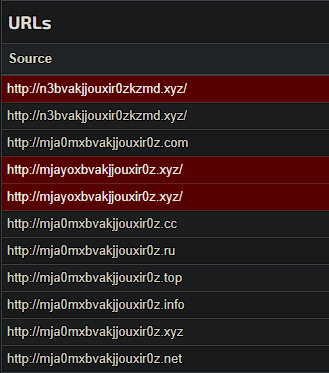
The malware also generates additional domains dynamically. The DGA generates one domain per TLD across .top, .xyz, .cc, .info, .com, .ru, and .net — visible in the sandbox URL list:
The DGA code in w.java:
private /* synthetic */ String B() {
    StringBuilder stringBuilder = new StringBuilder();
    Calendar calendar = Calendar.getInstance();
    String[] stringArray = ".top,.xyz,.cc,.info,.com,.ru,.info,.net".split(",");
    int n = stringArray.length;
    int n2 = 0;
    while (n2 < n) {
        String string2 = stringArray[n2];
        try {
            stringBuilder.append(",http://");
            String seed = String.valueOf(calendar.get(3) + calendar.get(1))
                               + "pojBI9LHGFdfgegjjsJ99hvVGHVOjhksdf";
            stringBuilder.append(
                Base64.encodeToString(seed.getBytes(), 2).substring(0, 19)
            ).append(string2);
        } catch (Exception exception) {}
        ++n2;
    }
    return stringBuilder.toString().toLowerCase();
}
The seed is built from:
calendar.get(3)→ ISO week numbercalendar.get(1)→ year- Hardcoded salt:
pojBI9LHGFdfgegjjsJ99hvVGHVOjhksdf
The result is Base64-encoded and truncated to 19 characters, then combined with each TLD. This generates 8 unique domains per week — if the hardcoded servers get blocked, the DGA keeps the malware connected.
Summary — Key Questions Q&A
Q1 — Which obfuscator and which obfuscation techniques are used?
A — Allatori Java Obfuscator, primarily string encryption. Detected and partially reversed with com.javadeobfuscator.deobfuscator.transformers.allatori.StringEncryptionTransformer.
Q2 — Reverse the obfuscation (at least partially). Describe your approach.
A — Ran Java Deobfuscator in detect mode to identify the obfuscator, then applied the matching Allatori transformer. Deobfuscation was incomplete in some areas but sufficient for the analysis.
Q3 — Which functionality does the malware support?
A — SharkBot’s capability set:
- C&C — remote control via
185.219.221.99 - SMS/MMS interception — read, write, send, receive
- Overlay attacks — fake UI over banking apps to steal credentials
- Keylogging
- Permission abuse — harvests device info and status
- Anti-emulation — detects and resists sandbox environments
It’s a banking trojan targeting credentials and crypto wallets, specifically capable of ATS (Automatic Transfer System) attacks.
Q4 — What are the C&C servers?
A —
- Hardcoded:
http://n3bvakjjouxir0zkzmd.xyz/,http://mjayoxbvakjjouxir0z.xyz/ - IP:
185.219.221.99:80/tcp(Sweden) - DGA-generated: 8 domains per week across
.top,.xyz,.cc,.info,.com,.ru,.net
Q5 — How does the domain generation algorithm work? Keep it high level.
A — Seeds a string from the current ISO week number + year, appended to a hardcoded salt. The result is Base64-encoded, truncated to 19 characters, and combined with each supported TLD. Rotates weekly, giving the malware resilient C&C connectivity even after domain takedowns.
Q6 — What’s the RSA public key?
MIIBIjANBgkqhkiG9w0BAQEFAAOCAQ8AMIIBCgKCAQEA2R7nRj0JMouviqMisFYt0F2QnScoofoR7svCcjrQcTUe7tKKweDnSetdz1A+PLNtk7wKJk+SE3tcVB7KQS/WrdsEaE9CBVJ5YmDpqGaLK9qZhAprWuKdnFU8jZ8KjNh8fXyt8UlcO9ABgiGbuyuzXgyQVbzFfOfEqccSNlIBY3s+LtKkwb2k5GI938X/4SCX3v0r2CKlVU5ZLYYuOUzDLNl6KSToZIx5VSAB3VYp1xYurRLRPb2ncwmunb9sJUTnlwypmBCKcwTxhsFVAEvpz75opuMgv8ba9Hs0Q21PChxu98jNPsgIwUn3xmsMUl0rNgBC3MaPs8nSgcT4oUXaVwIDAQAB
Used to encrypt C&C traffic with RSA/ECB/PKCS1Padding, with RC4 underneath. Hardcoded in x.java.